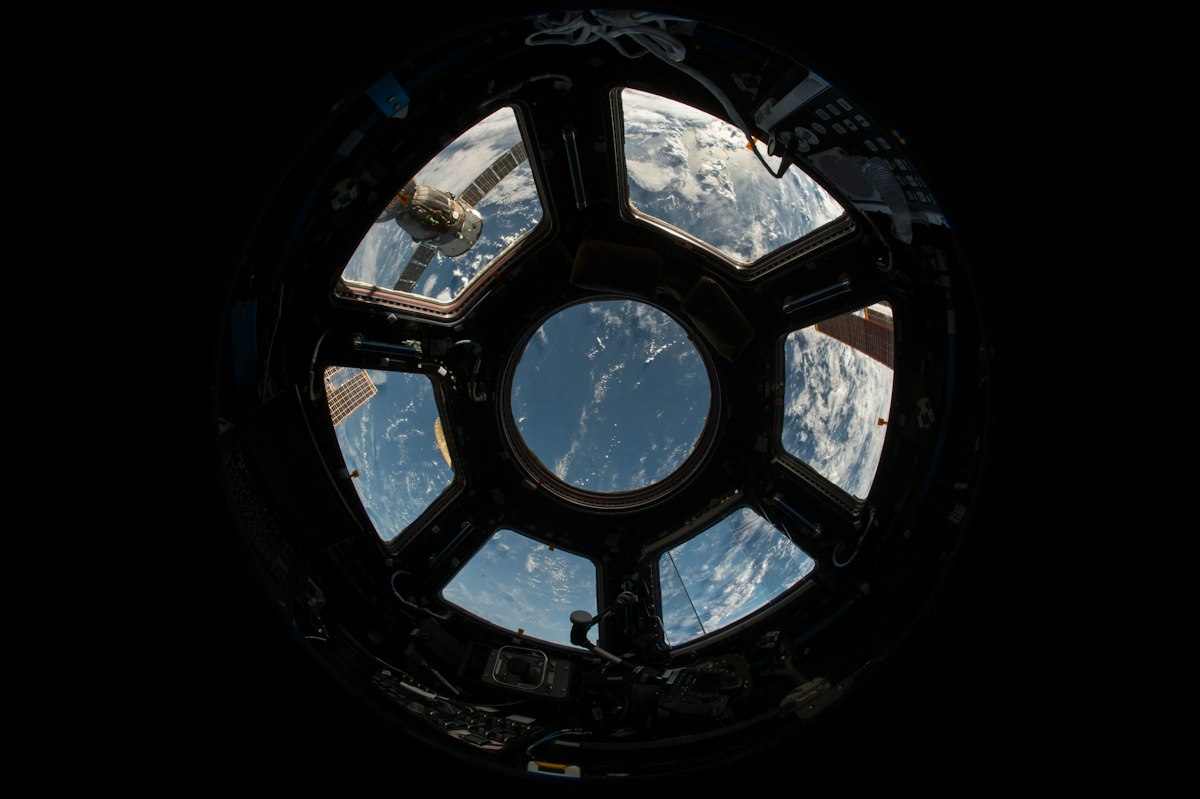
The orbital environment faces an accelerating sustainability crisis as satellite constellations proliferate and debris populations grow exponentially. This analysis examines the technical, regulatory, and economic dimensions of maintaining safe and sustainable space operations.
The Debris Problem: Scale and Trajectory
Current tracking systems monitor approximately 34,000 debris objects larger than 10 centimeters in low Earth orbit (LEO). However, statistical models estimate the total population:
- Objects >10cm: ~34,000 (tracked)
- Objects 1-10cm: ~900,000 (estimated)
- Objects <1cm: >130 million (modeled)
Even millimeter-scale debris poses catastrophic collision risk at orbital velocities of 7-8 km/s. A 1cm aluminum sphere carries kinetic energy equivalent to a bowling ball traveling at 480 km/h—sufficient to penetrate spacecraft shielding and cause mission-ending damage.
The Kessler Syndrome Threat
First theorized by NASA scientist Donald Kessler in 1978, the Kessler Syndrome describes a cascading collision scenario where each impact generates debris that causes further collisions, exponentially increasing the debris population. Some orbital regimes, particularly 800-1,000 km altitude, may have already crossed this threshold.
"Without active intervention, certain orbital shells will become unusable within decades—not centuries. The debris population is now self-sustaining through collisional cascading."
Major Debris-Generating Events
Several incidents have dramatically increased the tracked debris population:
2007 Chinese ASAT Test
China's destruction of its Fengyun-1C weather satellite created over 3,500 trackable fragments and an estimated 150,000 smaller pieces. The debris cloud, distributed across 200-4,000 km altitude, will persist for decades and has caused over 1,000 collision avoidance maneuvers.
2009 Iridium-Cosmos Collision
The first accidental hypervelocity collision between two intact satellites generated over 2,300 tracked fragments. This event validated Kessler's predictions and demonstrated that even a single collision in a heavily-trafficked orbit creates long-term hazards.
Starlink and Mega-Constellations
SpaceX has launched over 5,000 Starlink satellites since 2019, with plans for up to 42,000 spacecraft. Amazon's Project Kuiper, OneWeb, and Chinese constellations will add thousands more. While these satellites incorporate end-of-life disposal capabilities, their sheer numbers increase collision probability and create new operational challenges.
Debris Mitigation Standards
Multiple organizations have established guidelines for responsible space operations:
NASA's Orbital Debris Mitigation Standard Practices
- Limit debris released during normal operations
- Minimize debris generated by accidental explosions
- Disposal of spacecraft in LEO within 25 years of mission completion
- Removal from geosynchronous orbit to graveyard orbits
FCC Licensing Requirements
The Federal Communications Commission now requires satellite operators to:
- Demonstrate 90% disposal success rate capability
- Complete deorbiting within 5 years (reduced from 25 years)
- Share maneuverability and tracking data
- Implement collision avoidance procedures
This regulatory tightening reflects growing concern about mega-constellation risks, though enforcement mechanisms remain limited.
Active Debris Removal Technologies
Several technical approaches are under development for actively removing existing debris:
Robotic Capture Systems
Spacecraft equipped with robotic arms, nets, or harpoons can capture defunct satellites and guide them into destructive reentry. The European Space Agency's ClearSpace-1 mission, planned for 2026, will demonstrate capture and deorbiting of a Vega rocket upper stage.
Technical Challenges:
- Rendezvous with tumbling, non-cooperative objects
- Grappling mechanisms for varying target geometries
- Propellant requirements for debris capture and deorbit
- Economic viability at scale
Electrodynamic Tethers
Long conductive tethers interact with Earth's magnetic field to generate drag force, accelerating natural orbital decay. Japan's KITE experiment demonstrated this concept, though tether deployment reliability remains a challenge.
Laser Ablation
Ground- or space-based lasers can vaporize surface material, creating thrust that alters debris trajectories into faster-decaying orbits. This approach works only on small debris and requires precise tracking—capabilities currently limited to a few nations.
Drag Enhancement Devices
Deployable sail structures increase atmospheric drag, accelerating natural orbital decay. Many smallsats now include drag sails that automatically deploy at end-of-life. NanoAvionics, D-Orbit, and others offer these as standard spacecraft components.
Space Traffic Management
The U.S. Department of Commerce's Office of Space Commerce is developing a civil space traffic coordination capability to replace military tracking systems. Key objectives include:
- Enhanced Tracking: Improved sensor networks providing sub-meter positional accuracy
- Conjunction Assessment: Automated collision risk calculation and notification
- Data Sharing: Standardized formats for sharing orbital elements and maneuver plans
- Coordination Protocols: Decision frameworks for right-of-way during conjunction events
However, the system faces technical and political challenges. Operators must voluntarily share data, and no international enforcement mechanism exists for non-compliant actors.
Economic Dimensions
Sustainability measures impose costs that operators seek to minimize:
Disposal Costs
Reserving propellant for end-of-life disposal reduces revenue-generating operational lifetime. For GEO satellites, the ~100 m/s delta-v required for graveyard orbit disposal represents 1-2 years of operational station-keeping. In LEO, deorbit maneuvers must occur within operational lifetime constraints.
Collision Avoidance Maneuvers
Starlink performs over 25,000 collision avoidance maneuvers annually—approximately 6 per satellite per year. Each maneuver consumes propellant and creates operational disruption. As debris populations grow, maneuver frequency will increase, potentially affecting constellation economics.
Insurance and Liability
Space insurance markets are tightening requirements around debris mitigation. Operators without credible disposal plans face higher premiums or policy exclusions. However, liability for debris-causing collisions remains ambiguous under current international law.
International Governance Gaps
The Outer Space Treaty of 1967 establishes limited liability frameworks, but modern commercial space operations expose governance inadequacies:
- No Binding Debris Removal Obligations: Guidelines exist, but compliance is voluntary
- Limited Enforcement: No international body can compel operators to remove defunct spacecraft
- Liability Uncertainties: Proving causation in multi-party collisions is legally complex
- Mega-Constellation Externalities: Individual operators don't bear full social costs of their debris contributions
The United Nations Committee on the Peaceful Uses of Outer Space (COPUOS) discusses these issues, but consensus among spacefaring nations remains elusive.
Technology Development Roadmap
Achieving sustainable orbital operations requires coordinated technology development:
Near-Term (2024-2030)
- Widespread adoption of end-of-life disposal systems on new satellites
- Demonstration of active debris removal on selected high-risk objects
- Improved tracking of sub-10cm debris through advanced sensor networks
- Standardization of conjunction data messaging and maneuver coordination
Mid-Term (2030-2040)
- Economic active debris removal services removing 5-10 objects annually
- On-orbit satellite servicing enabling life extension and disposal assistance
- Advanced propulsion systems (electric, solar-thermal) enabling efficient deorbit
- International governance framework with enforceable standards
Long-Term (2040+)
- Fully sustainable orbital operations with zero net debris growth
- Economic incentives aligned with debris reduction
- Space-based manufacturing using recycled orbital materials
- Comprehensive traffic management across cislunar space
Conclusion
The orbital debris challenge represents a classic tragedy of the commons—individual actors benefit from orbital access while distributing collision risks across all operators. Without coordinated international action, certain orbital regimes will become unusable, foreclosing options for future generations.
Technical solutions exist, but they require economic incentives and regulatory frameworks that don't yet exist. The next decade is critical. If mega-constellations deploy without adequate safeguards, and if high-risk derelict objects aren't removed, the space community may face an orbital environment crisis that takes centuries to resolve naturally.
The question isn't whether we have the technology to maintain sustainable space operations—we do. The question is whether we can establish the governance structures and economic mechanisms to implement these technologies before collisional cascading makes intervention prohibitively expensive.